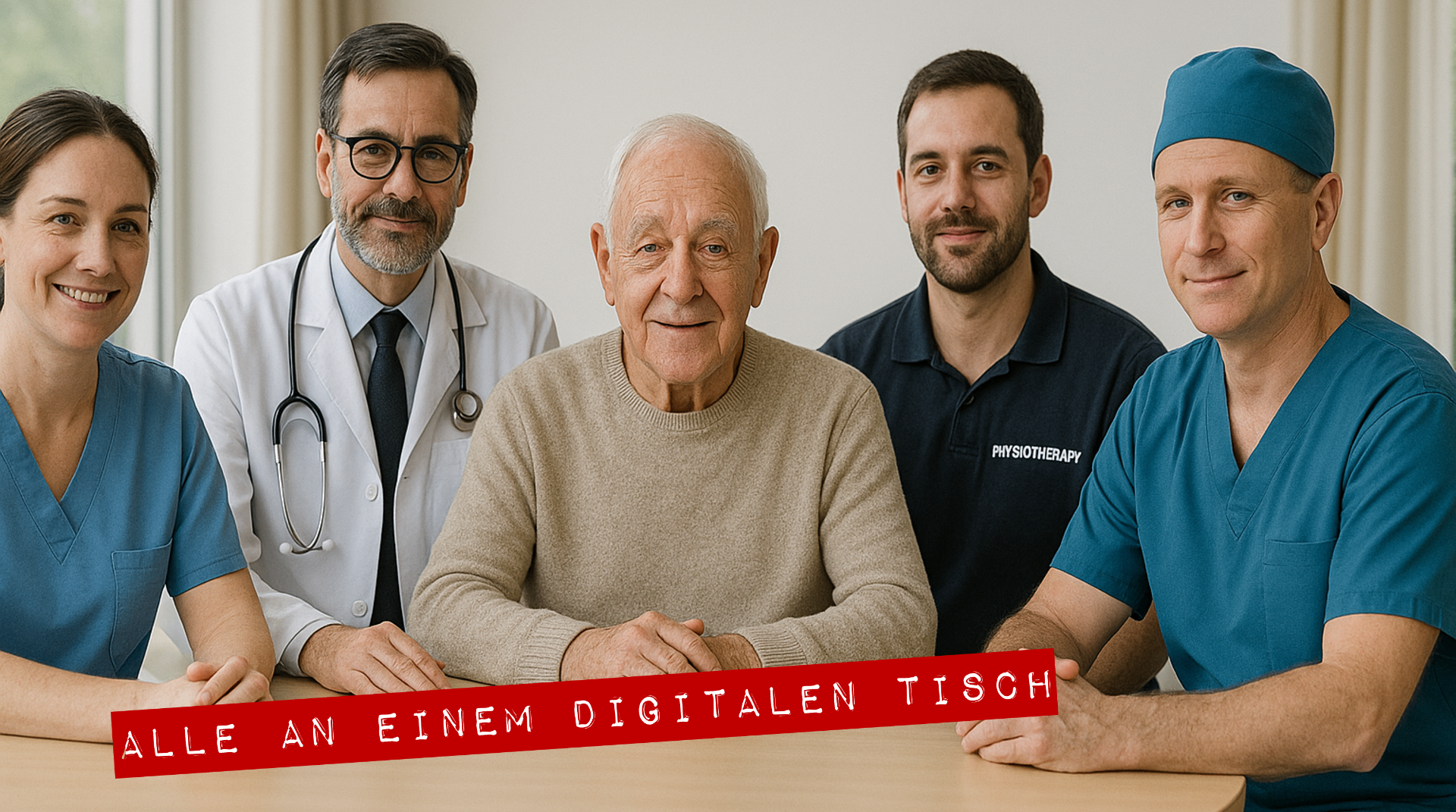
On May 21, 2025, all the people who had participated in the Digital Residency Practice (DRP) over the past 26 months came together in Eisleben. At the major stakeholder workshop, experiences were exchanged, assessments were made, and the focus was directed toward the future. One thing became particularly clear: Technology is not the decisive factor for the success of such care models – it is successful communication between all participants.
The project goal was achieved
The good news first: The project goal of the DRP was achieved within the project duration. All consortium partners showed great satisfaction with the results and formulated a common concern: The DRP should be sustained and further expanded. The willingness to continue is high – because the concrete benefit was tangible in practice.
Success requires communication – not just technology
Although the digital structures functioned predominantly stable during the project course, the real key lay elsewhere: In dialogue. Whenever nursing staff, doctors, physiotherapists, coordination centers, and other professional groups remained in exchange with each other, challenges could be solved together. Communication was the central engine for coordination, trust, and flexible response to the unexpected.
Especially in a model like the DRP, which aims for cross-sectoral, networked care, this aspect is crucial. The concept of Continuum of Care – i.e., seamless, interprofessional care – can only succeed if interfaces are designed lively and carried together. The experiences from the project show: This is exactly what is possible when all participants are included and taken seriously.
Nursing as a supporting pillar – therapeutic authority is central
Another central point: The role of nursing. For models like the DRP to become effective, real participation of nursing professions is needed – not only in implementation but also in design. For this, therapeutic authority for nursing staff is a crucial step. Only when nursing personnel are legally and professionally empowered to take on therapeutic tasks can such care function sustainably and self-effectively in everyday life.
The DRP has shown that nursing can achieve much more when framework and trust are right. In practice, a cooperation at eye level emerged – an important step toward modern, team-oriented healthcare.
What remains – and what comes
The stakeholder workshop impressively showed how much expertise, commitment, and common will came together in this project. Despite structural challenges – such as the difficult integration of specialists due to lack of time resources and unclear incentive systems – the project could be successfully realized. These points need to be better regulated legally and structurally in the future so that such models don't remain the exception.
At the same time, it became clear: Reliable communication, clear responsibilities, and a culture of cooperation are at least as important as technical equipment or funding. The DRP model can serve as a lighthouse for future-oriented care – provided we specifically promote the cooperation of health professions and create suitable framework conditions for collaboration at eye level.